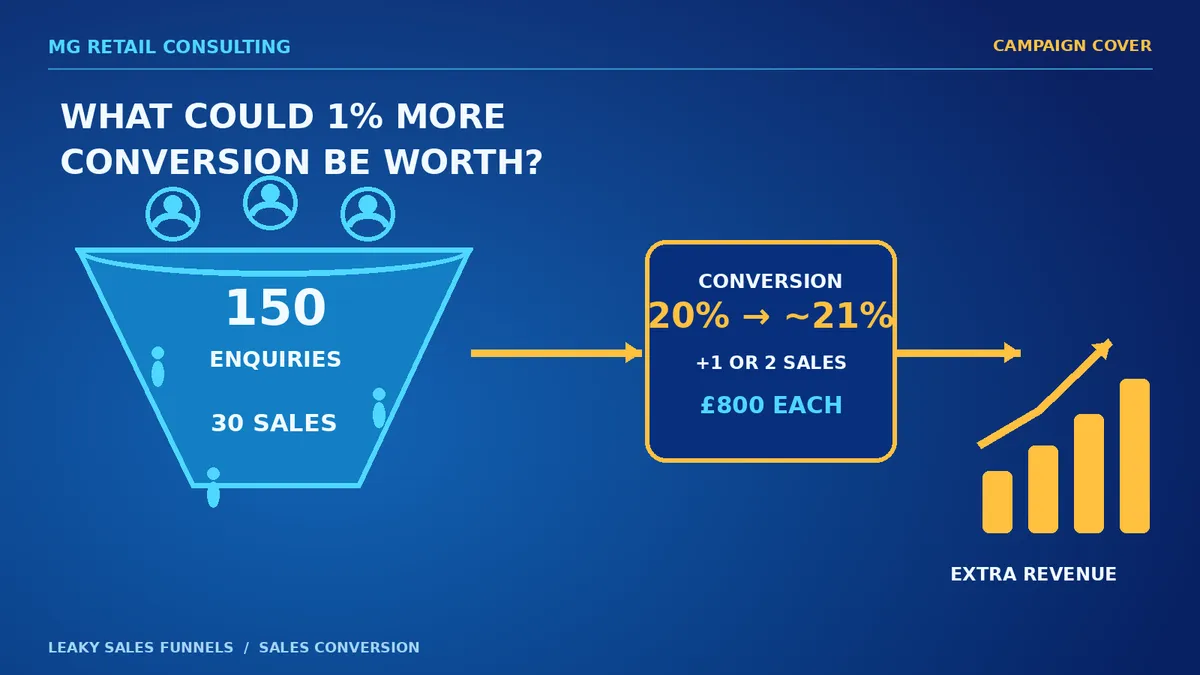
What Could a 1% Sales Conversion Improvement Be Worth?
Sales, Marketing, Retail Growth
What Could a 1% Improvement in Sales Conversion Be Worth?
The number most businesses overlook
Owners often know their sales target and marketing budget. Fewer can tell you their enquiry-to-sale conversion rate. Without it, the debate about whether to buy more leads becomes guesswork. One percentage point may sound tiny, but it can be meaningful when enquiry volumes are consistent.
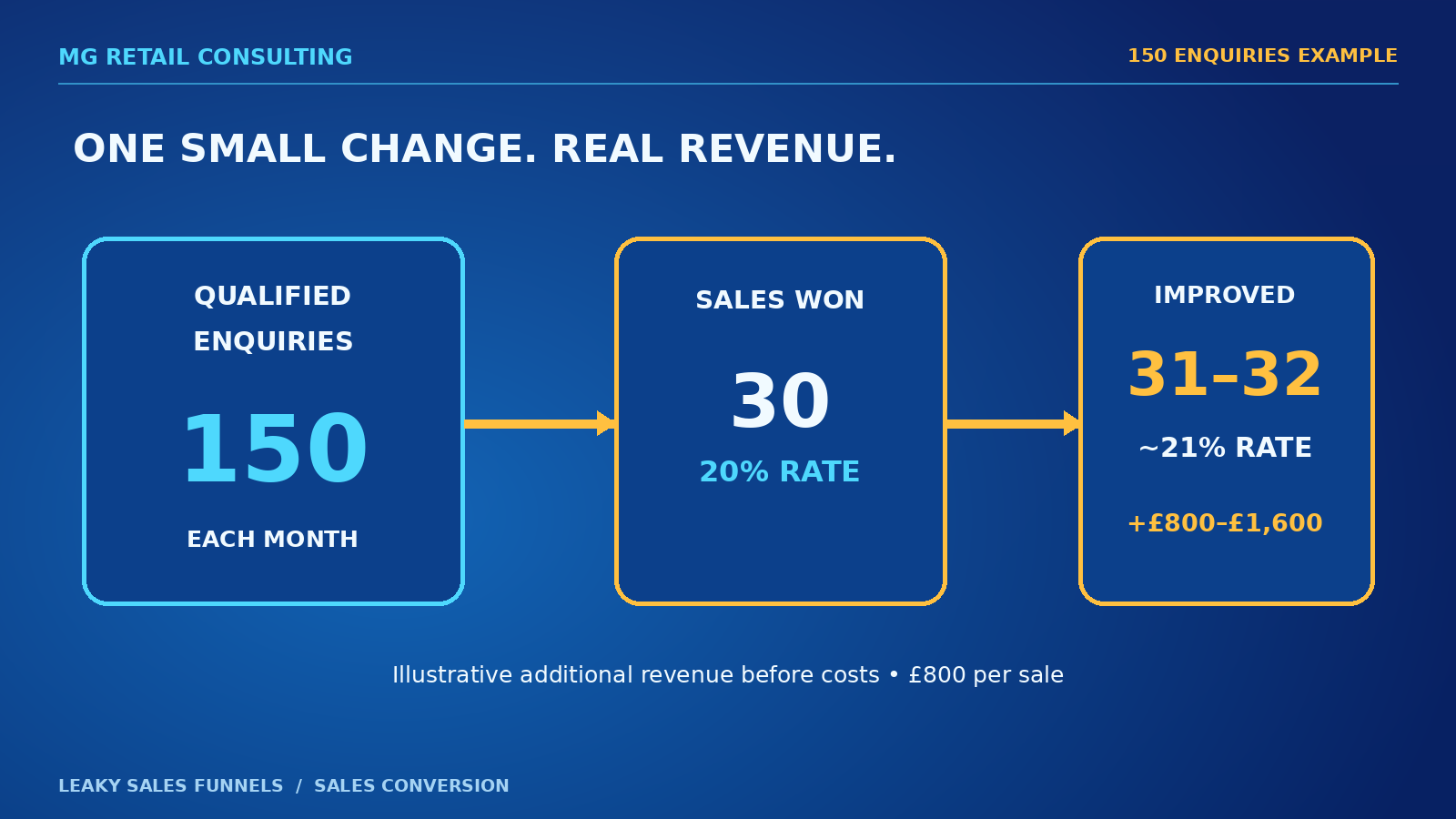
A straightforward example
Suppose you receive 150 qualified enquiries each month and 30 become customers. That is a 20% conversion rate. If 31 or 32 people buy instead, your rate moves to roughly 21%. At an average order value of £800, each additional sale adds £800 in revenue before costs. This is an illustration; actual results will vary.
Revenue isn't the same as profit
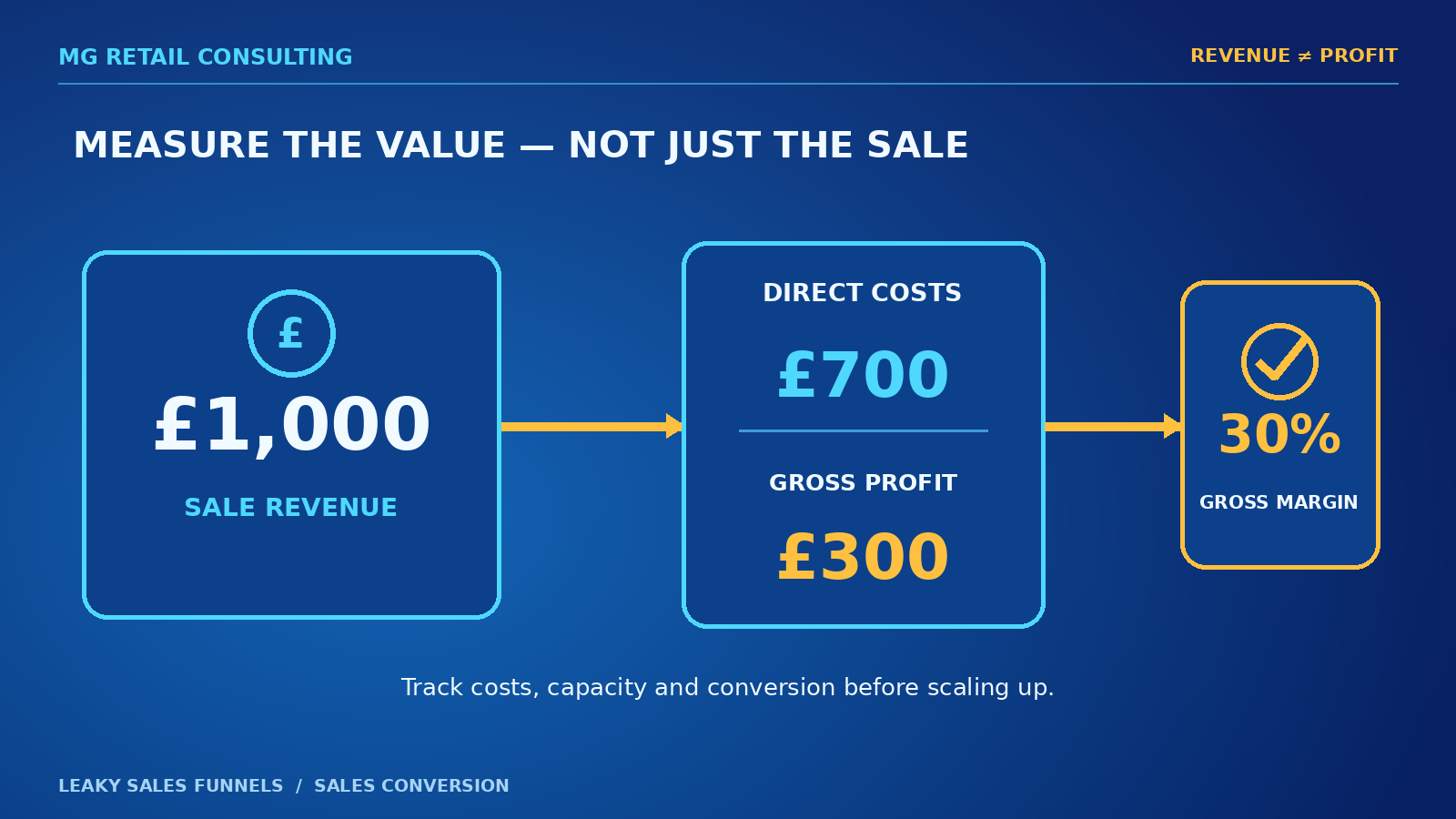
Extra sales come with product, delivery, staffing, and fulfilment costs. A £1,000 sale with a 30% gross margin does not create £1,000 of gross profit. Track margin and capacity alongside conversion so a successful sales campaign does not overload operations or drain cash.
Know what you are measuring
Count qualified enquiries consistently. Avoid mixing casual website visits with people who have genuinely asked to buy or book. Record which period a lead entered your pipeline and when a sale was made. For businesses with long buying cycles, track results over time rather than judging them only at month-end.
Make one controlled improvement
Choose one change, perhaps faster response times, better quotation follow-up or a clearer next step, and test it for a defined period. Review both conversion and customer experience. You do not need a complex dashboard to start; you need numbers the team trusts and uses.
Ready to take the next step?
At MG Retail Consulting, I help independent retailers and growing businesses find the gaps in their sales and marketing, improve the processes behind them and put practical systems in place. If you want a clearer picture of where opportunities are being lost, take the 60-SECOND MARKETING AUDIT to see where your leads are slipping.
Mike Glynn | Founder, MG Retail Consulting
You can also dive deeper into strengthening your systems by reading this related article: Why Customers Go Cold After a Quotation - and How to Win Them Back
