
Harnessing the Purple Pound for Business Growth
Accessibility, Purple Pound, Longevity Economy, Business Growth Strategy
Why the Purple Pound and Longevity Economy Should Be at the Heart of Your Growth Strategy
The spending power of disabled people and older adults is reshaping the global economy. Yet most businesses are still leaving vast amounts of money on the table by treating accessibility and ageing as side issues rather than strategic priorities. At MG Retail Consulting, we see this every week with ambitious local business owners who want growth but are unintentionally shutting the door on some of their most valuable customers.
The Purple Pound: £446 billion in the UK, $18 trillion globally
The Purple Pound describes the collective spending power of disabled people and their families. The latest robust estimates put its value at an astonishing £446 billion per year in the UK alone, based on updated research from the University of Bristol’s Personal Finance Research Centre. Globally, the disability market is estimated at around $18 trillion when you include friends and family who make purchasing decisions with accessibility in mind.
For a local retailer, café, professional service or hospitality business, that is not an abstract macroeconomic number. It is the difference between a flat year and a record year. It is whether a family chooses your venue or the one down the road because you have step-free access, clear signage, staff who know how to assist, and a website that works with screen readers and large text. When you ignore accessibility, you are not just risking a complaint; you are walking away from a share of a multi-trillion-dollar market.
📌 Key Takeaway: If your business is not actively designing for disabled customers, it is actively designing them out – and handing their spending power to competitors.
Accessibility: From compliance headache to growth engine
Many owners still frame accessibility in terms of compliance – “What do we have to do to stay on the right side of the law?” That mindset is expensive and demotivating, because every change feels like a cost or a risk. The reality is very different. Accessibility is a growth opportunity, a brand differentiator, and a powerful way to build trust.
Growth opportunity: Make it easier for disabled customers and older adults to buy from you, and you instantly expand your addressable market. Small, practical changes – from adjustable lighting and seating to clearer menus and accessible online booking – can unlock repeat visits and higher average spend.
Brand differentiator: In crowded local markets, genuine accessibility sets you apart. A reputation as “the place that really looks after everyone” is far more compelling than yet another discount offer. It travels fast through word of mouth, social media and community groups.
Trust builder: When people see that you have thought about their needs – ramps, quiet spaces, larger print, flexible appointment times – they feel respected. That emotional trust translates into long-term loyalty and a higher tolerance when the odd thing goes wrong.
💡 MG Retail Consulting: Start by mapping a disabled or older customer’s full journey – online search, arrival, service, payment and follow-up. Every friction point you remove is a revenue opportunity gained.
The Longevity Economy: Ageing is the new growth market
Alongside the Purple Pound sits the broader Longevity Economy – the economic activity generated by people aged 50 and over. Globally, we are in the middle of a profound demographic shift. The World Bank estimates that around 10.4% of the world’s population was 65+ in 2025, and United Nations projections show that the number of people aged 65 and above will exceed 1.6 billion by 2050. The World Health Organisation expects the 60+ population to rise from 1 billion in 2019 to 2.1 billion by 2050.
In high- and upper-middle-income countries, there is already more than one person aged 65 or older for every person aged 15–24, with that ratio projected to reach nearly three to one by 2050. This is not a temporary bump; it is a structural realignment of who your customers, staff and community members are. Older adults are living longer, often working longer, and spending more – especially on experiences, health, home comfort and services that make life easier and more meaningful.
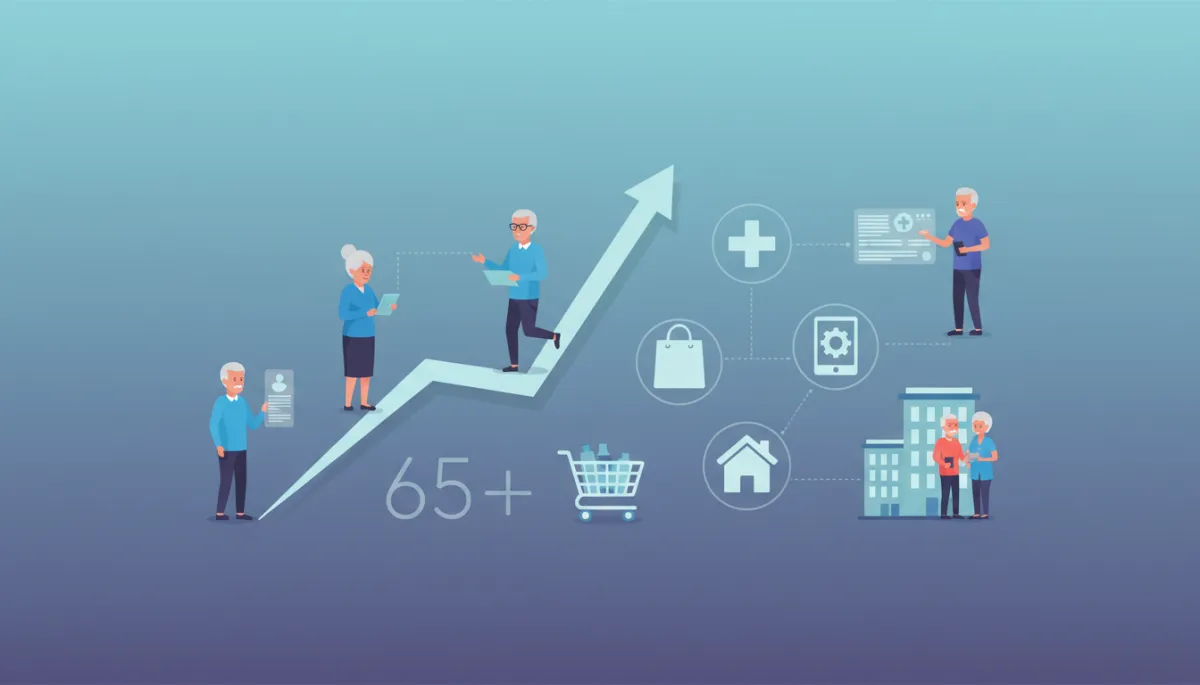
The expanding 65+ population is shifting spending towards health, comfort and convenience.
Regenerative medicine, longevity biotech and real clinical progress
The Longevity Economy is not just about more birthdays; it is about longer healthspans – more years lived in good health. Investment is pouring into regenerative medicine, longevity biotech and related clinical fields. From cellular therapies and gene editing to advanced diagnostics and personalised prevention programmes, we are seeing genuine clinical work move from the lab into mainstream healthcare and consumer services.
Reports suggest the core consumer longevity market could triple in value over the next decade, driven by technologies that help people stay mobile, cognitively sharp and independent for longer. For local businesses, this translates into demand for products and services that support active ageing: accessible fitness, safe home adaptations, tech support for older users, nutrition, travel, culture and community spaces that welcome and celebrate older adults.
Macro-level reallocation: Healthcare, insurance, retirement and technology
As populations age, we are already seeing macro-level economic reallocation across healthcare, insurance, retirement and technology systems. Public and private spending is shifting towards long-term care, chronic disease management, remote monitoring, home-based support, and financial products designed for longer, more flexible working lives. Pension systems, housing markets and labour policies are all under pressure to adapt.
Technology is at the centre of this reallocation: digital health platforms, smart home devices, accessible transport apps and age-inclusive user interfaces are becoming essential infrastructure. Businesses that understand how these systems are evolving can position themselves as trusted partners – for example, by offering services that integrate with telehealth, by providing age-friendly digital onboarding, or by collaborating with local care providers and community organisations.
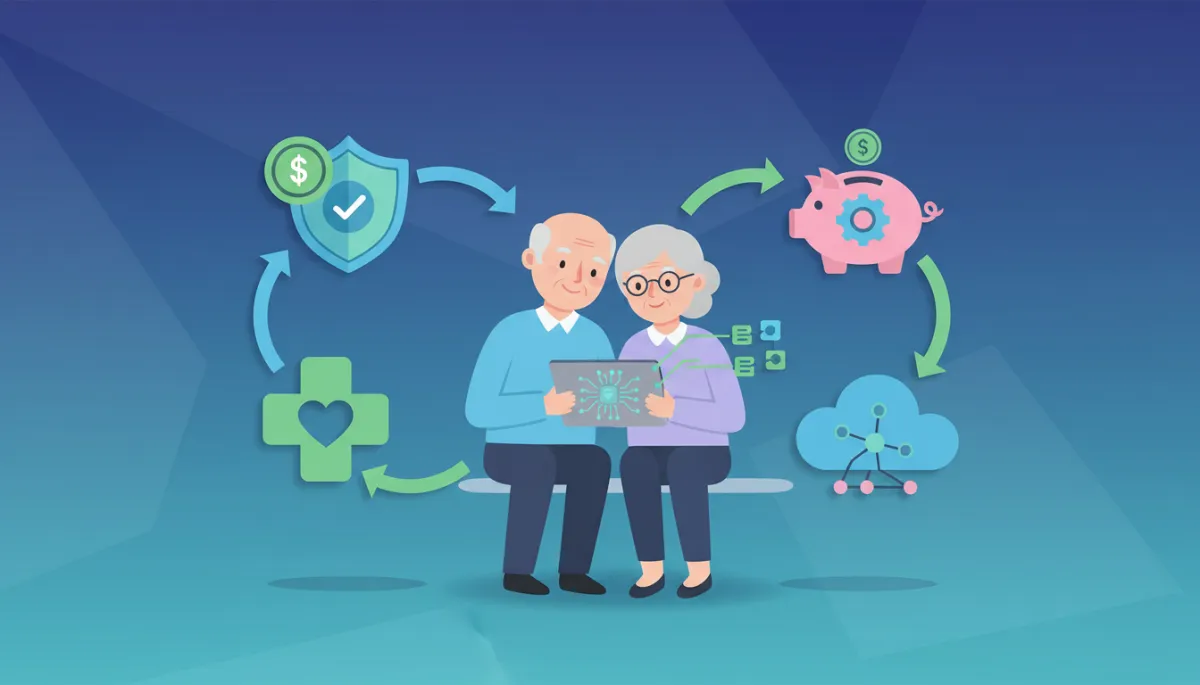
Longer lives are driving capital, innovation and policy shifts across multiple sectors at once.
Inclusive business models for older adults: From nice-to-have to non‑negotiable
Against this backdrop, the need for inclusive business models that actively cater to older adults is urgent. This is not about patronising “senior discounts” once a week; it is about redesigning what you offer, how you deliver it, and how you communicate, so that people in their 60s, 70s, 80s and beyond can access your value without friction or embarrassment.
Rethink service design: longer appointment slots, clearer explanations, staff trained to support mobility or sensory impairments, and options for carers to be involved.
Rethink products: packaging that is easy to open and read, interfaces that work for older eyes and hands, and features that prioritise safety and independence.
Rethink communication: plain language, multiple channels (phone as well as digital), and imagery that shows older adults as active, capable customers – not stereotypes.
💬 MG Retail Consulting Coach perspective: When we audit clients’ customer journeys, older adults and people with disabilities are often the best “stress test”. If they can navigate your business smoothly, everyone else can too – and your revenue reflects it.
Redesigning systems for longer healthspans – and the risks of doing nothing
Longer lifespans and healthspans demand that we redesign our systems – from work patterns and customer support to product lifecycles and community spaces. For businesses, that means planning for customers who may stay with you for decades, whose needs will evolve, and who will reward brands that evolve with them. It also means recognising that many of your “younger” customers today are the older customers of tomorrow; inclusive design is future-proofing.
The risks of ignoring this demographic shift are real and measurable:
Lost revenue from the Purple Pound and older consumers who simply go elsewhere.
Reputational damage in an era where exclusion is quickly called out online and in local communities.
Higher retrofit costs later, when regulations tighten, or competitors set new expectations, and you are forced to catch up in a hurry.
Making the Purple Pound central to your inclusive business strategy
So how do you move from theory to action? At MG Retail Consulting Coach, we work with owners to embed the Purple Pound as a core pillar of their inclusive business strategy, not a side project. That typically means:
Quantifying the opportunity: Estimating how many disabled and older adults live in or travel within your catchment area, and what a realistic share of their spending could mean for your turnover over the next 12–36 months.
Prioritising quick wins: Low-cost, high-impact improvements such as staff training, signage, website accessibility tweaks and simple physical adjustments that make a visible difference fast.
Building accessibility into every decision: Treating it as a standard question alongside price and quality whenever you change your premises, processes, tech stack or marketing.
When you approach accessibility and longevity this way, you stop asking, “What will this cost?” and start asking, “What growth are we unlocking, and how quickly will it pay back?” That is where the conversation becomes energising, practical and directly linked to your goals for revenue and personal freedom.
The opportunity is here now – will your business seize it?
The combination of the £446 billion UK Purple Pound, the $18 trillion global disability market and the rapidly expanding Longevity Economy is one of the most powerful growth forces of our time. Businesses that respond with inclusive, accessible, age-smart strategies will not only do the right thing morally; they will also put themselves in the strongest possible position to grow, hire, invest and give their owners more freedom over how they live and work.
If you are ready to turn accessibility and longevity into concrete results – more customers, higher spend, stronger loyalty – MG Retail Consulting Coach is here to help you map it out and execute with confidence. Let’s connect and make it happen — contact us today to take your business to the next level, powered by the Purple Pound and the Longevity Economy.
