Why Mobility Sales Leads Go Cold
Mobility Retail, Local Business, Sales Follow-Up, Lead Management
Why Do Mobility Sales Leads Suddenly Stop Responding?
Discover the real reasons mobility enquiries go cold – and how local mobility retailers can improve follow-up, protect valuable opportunities, and convert more of the leads they already have.
A customer enquires. You respond. There is a good conversation. Perhaps they visit the showroom or arrange a home assessment. A quotation is sent. Then nothing. Calls go unanswered. Emails are ignored. The customer who initially seemed interested appears to have disappeared.
Most local mobility businesses recognise this situation. The temptation is to label the opportunity: "Gone cold." But that description doesn't tell you what happened or what to do next. Did the customer lose interest? Did they choose another supplier? Did their circumstances change? Did your team leave too long between contacts? Was there no clear next step? Or were they never really ready to buy in the first place?
Why Understanding Cold Mobility Leads Matters So Much
Understanding why mobility leads go cold matters because the answer determines what you should do next. Not every enquiry can or should become a sale. Some customers will decide against buying. Others will simply not be the right fit. That is normal. But too many local mobility retailers lose perfectly good opportunities simply because momentum disappears from the customer journey and nobody quite knows why.
A cold lead is usually a symptom, not a random event. Something has changed. The customer's urgency may have reduced. Another priority may have appeared. A family member may have raised questions. They may have spoken to a competitor. Or your business may have left too much time between contacts and allowed the relationship to drift. When you treat "gone cold" as the end of the story, you lose the chance to learn, improve follow-up, and protect future revenue.
📌 Key Takeaway: The more clearly you understand why leads go quiet, the better you can design follow-up that keeps good enquiries moving and stops valuable opportunities falling through the cracks.
A Better Question: What Changed Between Enquiry and Silence?
Businesses often talk about cold leads as though customers simply switched off. In reality, something usually changed between their initial enquiry and the moment they stopped responding. That might be:
A delay in your response or quotation
Confusion or overwhelm about options and pricing
Family conversations that raised new questions or doubts
A competitor offering a clearer or cheaper-looking solution
A change in health, finances, or care arrangements
That means the more useful question is not "Why isn't this customer answering?" but "What changed between their initial enquiry and now?" That shift in thinking is powerful. It moves the conversation away from blaming the customer and towards understanding – and improving – your sales process.
1. When Too Much Time Passes, Momentum Disappears
Momentum matters. Someone who enquires today is usually more engaged today than they will be three days later. That doesn't mean every mobility customer is in a rush to purchase; many are not. Mobility products often involve considered decisions, family input, assessments and significant expenditure. But there is still a difference between giving the customer time and allowing the opportunity to drift out of sight and out of mind.
Imagine a customer requests information about a mobility scooter. They speak to your team on Monday, and you promise a quotation. It arrives on Thursday. Nobody contacts them again until the following week. By that point, they may have spoken to several other retailers, or simply lost the energy to keep researching. The issue was not necessarily price or product. The business allowed too much space for momentum to disappear.
💡 Insight: Respond to new enquiries the same day where possible, and send quotations within an agreed, clearly communicated timeframe.
Practical Ways to Protect Momentum
Agree the next step while the customer is engaged. If you are sending a quotation, tell them when it will arrive and agree when you will speak again. Instead of “Give us a call if you want to go ahead," try "I’ll send that over this afternoon. Would it be useful if I gave you a call on Thursday to see if you have any questions?”
Set internal response standards. For example, acknowledge all new enquiries within two hours, and follow up on all quotes within 48 hours of sending.
Use reminders or a simple CRM. Even a basic system that flags when follow-up is due can prevent good leads from being forgotten.
2. Interested, But Not Yet Ready to Buy
Interest and buying readiness aren't the same, especially in the mobility sector. A customer may be researching on behalf of a parent, exploring products before a hospital discharge, or planning ahead because they know their circumstances are changing. They might enquire today even though they won’t decide for several weeks or months. That does not make them a poor-quality lead; it makes them an early-stage lead.
Problems arise when you treat every enquiry as though it should buy immediately. If they don't, you label the lead "cold" and forget it. In reality, many of these people will buy, but only if you manage follow-up in a way that matches their timeline and respects their situation.
Questions That Reveal Buying Readiness
“What has prompted you to start looking now?”
“Are you hoping to solve this fairly quickly, or are you researching your options?”
“Is anyone else involved in the decision – for example, family or healthcare professionals?”
These questions help you distinguish between someone whose scooter failed this morning and needs urgency, and someone who is exploring options for a parent who may move in six months. The follow-up approach should be very different – perhaps a shorter, more intense series of contacts for urgent needs, and a lighter, more educational touch for longer-term plans.
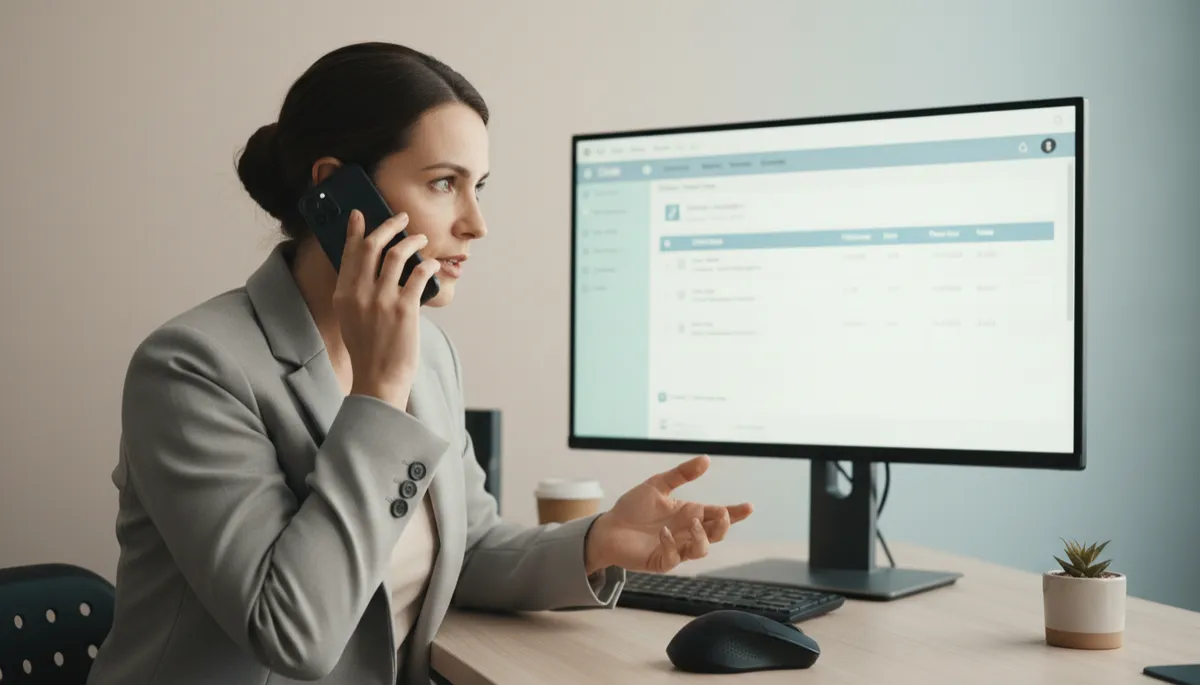
Close-up of a mobility consultant on the phone at a tidy desk, CRM screen visible with follow-up...
Clear notes and timelines help distinguish early researchers from ready-to-buy customers.
3. No Clear Next Step: The Silent Killer of Good Enquiries
One of the biggest reasons enquiries go cold is surprisingly simple: nobody agreed what should happen next. A conversation ends with “Have a think and let us know.” It sounds polite and low-pressure, but commercially, nothing has been agreed. The customer has no reason to re-engage. The salesperson has no clear action. The opportunity just sits there until it quietly disappears.
Make “What Happens Next?” Part of Every Conversation
Suggest a specific next step: a home assessment, a showroom demonstration, sending measurements, confirming funding, or a follow-up call on a particular date.
Phrase it respectfully: "Why don't I give you a call next Tuesday after you've had the chance to speak to your daughter?" This keeps the relationship moving without pressure.
💡 Insight: For every active opportunity, you should be able to answer one simple question: “What is the agreed next step, and when will it happen?”
4. When Customers Feel Overwhelmed, They Often Do Nothing
Mobility products can be complicated. Faced with different sizes, battery options, seating choices, warranties, accessories and prices, customers – and their families – can quickly feel overwhelmed. For someone already dealing with a change in mobility, illness or caring responsibilities, too much information can make the decision harder, not easier. When people become uncertain, a very common response is to do nothing at all.
Help Customers Decide, Don't Just Present Options
Explain your recommendation in plain language: why this product, this specification, at this price, for this customer's situation.
Highlight the two or three things they genuinely need to consider, rather than listing every possible feature.
Offer to speak with involved family members so they can ask questions directly rather than raising doubts later.
A good salesperson in a local mobility business is not just a product expert; they are a guide through a stressful decision. When you reduce complexity, customers feel more confident – and more likely to keep engaging with you instead of quietly stepping away.
5. If You Look Like Everyone Else, Price Becomes the Only Difference
If every retailer appears to offer similar products, customers naturally begin comparing price. This often happens when the retailer spends too much time talking about product features and too little time demonstrating the value surrounding the purchase. A customer receives your quotation, searches online, and finds something that looks similar for less money. Your lead suddenly stops responding, and it is easy to conclude “they were only interested in price.”
Build Your Value Story Into Every Conversation
Talk about your assessment process, not just the product: how you ensure the equipment is safe, suitable and comfortable for the customer’s home and lifestyle.
Explain what is included: delivery, set-up, adjustments, training on how to use the product safely, and aftercare support.
Emphasise that you are a local business with a workshop or service capability nearby, and what happens if something goes wrong.
Do not wait until the customer challenges your price to explain your value. By then, it may be too late. Build it into the conversation from the beginning so they understand what they are buying from your business, not just which product they are buying.
6. Repetitive Follow-Up vs. Useful Follow-Up
Follow-up is not the same as chasing. A message like “Just checking whether you want to go ahead?” repeated several times is not especially helpful to the customer. Eventually, many people simply stop responding. Each follow-up should have a clear purpose and add value.
Examples of Useful Follow-Up for Mobility Retailers
Answering a question they raised during the assessment, such as confirming ramp measurements or doorway widths.
Sharing information about delivery times, servicing, or an alternative model that may better fit their car or home layout.
Checking whether circumstances have changed since you last spoke, respectfully.
Instead of repeatedly asking “Have you made a decision?", you might say: "When we spoke, you mentioned that getting the scooter into your daughter's car was important. I've checked the folded dimensions of the model we discussed and wanted to send those through." Now you are adding value rather than simply pushing for a decision, a much better reason for the customer to keep the conversation going.
7. When Nobody Really Owns the Opportunity
In many growing local businesses, an enquiry enters the shop or website, one person takes the initial call, another does the assessment, and someone else creates the quotation. Then everyone assumes somebody else is following up. The lead is technically "in the business", but nobody truly owns it.
Simple Ownership Rules for Better Follow-Up
Every active opportunity should have one clearly named owner, even if other team members help with tasks.
Your CRM, diary, or spreadsheet should show: who owns this, when the last meaningful contact was, what the next action is, and when it's due.
If any of those answers are unclear, the opportunity is vulnerable. Clarifying ownership is one of the most practical ways to improve follow-up and conversion without spending a penny more on marketing.
8. When Circumstances Genuinely Change
Not every cold lead represents a failure, particularly in mobility. A customer’s health may change. They may be admitted to hospital. The family may decide on a different care arrangement. Funding may become unavailable. A planned move could alter their requirements. Sometimes the original need simply disappears, and that is completely normal.
Distinguishing Lost Leads from Future Opportunities
If a customer tells you their situation has changed, record it. Do not keep contacting them as though nothing has happened; that can damage trust and your local reputation.
Where appropriate, ask whether it would be helpful to reconnect later, and if so, when. For example, after building work, a move, or a medical review.
Good lead management includes knowing when to stop, and when to schedule a gentle check-in for the future. That is how you distinguish between genuinely lost leads and those that may purchase later, without overwhelming customers who are already dealing with a lot.
How Long Should You Follow Up a Mobility Lead?
There is no single correct answer. The right approach depends on the type of enquiry, urgency, value of the opportunity and the customer’s circumstances. Someone needing an urgent replacement product requires a very different follow-up pattern from somebody researching future options for a parent. This is why rigid scripts can be problematic. The better approach is to combine a clear process with professional judgement.
Set minimum expectations: how quickly a new enquiry should receive a response, how many reasonable attempts should be made, and when to mark something as lost.
Use those rules to support, not replace, a human conversation that accounts for health, family involvement, and emotional factors.
Respectful Re-Engagement: When Leads Go Quiet but Haven't Said No
If someone has not clearly said "no", there may still be an opportunity to re-engage, but not by sending the same message over and over. Consider whether you have something genuinely useful to say. You might refer back to their original requirement, provide helpful information, or politely hand control back to them. For example:
“You mentioned that you were discussing the scooter with your family. I didn’t want to keep contacting you unnecessarily, so I thought I’d check once more. If you’re still considering it, I’m very happy to help. If things have changed, just let me know and I’ll update our records.”
This approach is respectful, gives the customer an easy way to respond, and allows your business to clean up its pipeline without burning bridges in your local community.
Managing "Later" Leads Without Clogging Your Pipeline
Not every opportunity should remain in an active sales pipeline indefinitely. That is where even a simple CRM, diary system or spreadsheet becomes useful. Instead of keeping an opportunity open for six months, record why the customer is not buying now and when it may be appropriate to reconnect. Perhaps their existing scooter is still working, but they expect to replace it next year. Maybe they are waiting for building work to be completed. Perhaps the family will reconsider once circumstances change.
In that case, the lead is not "cold"; it is being managed according to its actual timeframe. That distinction improves both follow-up and sales forecasting, and helps local owners see more clearly which enquiries deserve attention this week and which should be nurtured over the longer term.
Are Too Many of Your Leads Going Cold? How to Find Out
Before spending more on advertising or new lead-generation campaigns, it is worth asking a few simple questions about your current pipeline:
How many opportunities currently have no next action recorded?
How many quotations have had no contact for 14, 30 or 60 days?
How many leads have no recorded outcome at all?
How many prospects received only one unsuccessful telephone call before being forgotten?
Those numbers can be revealing. You may discover that what looks like a lead-generation problem is actually a follow-up problem. Or you might find that most opportunities are being handled well and the issue genuinely sits with lead quality. Either conclusion is useful. The important thing is knowing.
Activity vs. Progress: What Effective Follow-Up Really Looks Like
A stronger sales process does not mean telling staff to make more phone calls. Activity alone is a poor measure. A salesperson can make fifty calls and achieve very little if none of those conversations moves customers closer to a decision. The objective is progression, not noise.
Did the conversation clarify the customer's need?
Was an appropriate next step agreed?
Did an assessment take place, or a quotation get explained clearly?
Did you identify a barrier, such as funding, family concerns, or home layout?
Good follow-up helps the customer move towards a decision. Sometimes that decision is yes. Sometimes it is no. Both are better than months of uncertainty, where nobody is sure what is happening and valuable time is wasted on opportunities that aren't going anywhere.
The Real Cost of a Cold Lead for Local Mobility Retailers
When a genuine lead goes cold unnecessarily, you lose more than the immediate sale. You also lose the marketing spend required to generate the enquiry, the time your team spent responding, the assessment or demonstration, the quotation, and the gross profit from the potential sale. In mobility retail, you may also lose years of future value through servicing, repairs, replacement products and referrals within families and local communities.
That is why lead management should not be treated as a minor administrative task. It is part of the business's commercial engine, especially for local retailers who rely on reputation, repeat custom and word-of-mouth as much as on advertising.
Before Generating More Leads, Fix the Leaks in Your Process
There is nothing wrong with wanting more enquiries. A healthy flow of new opportunities matters. But if large numbers of existing leads go cold without a clear explanation, increasing marketing spend may simply increase the volume entering the same weak process. The most cost-effective way for many local mobility retailers to grow is to improve how they handle the enquiries they already receive.
Are you responding to enquiries quickly enough?
Is buying readiness understood and recorded?
Does every active opportunity have a clear owner and a next step?
Does your follow-up add value, or just repeat the same question?
Answering these questions can reveal opportunities that additional advertising alone will never fix. A cold lead isn't always a bad lead. Sometimes it is simply an opportunity the business stopped managing.
🔍 Where Is Your Business Losing Money? Cold leads are only one place potential revenue can disappear. Missed enquiries, weak quotation follow-up, inconsistent sales processes, poor aftercare and lost customer retention opportunities can all create further leaks. The first step is identifying where they are happening. Tools such as the MG Retail Consulting Revenue Leak Finder can help you pinpoint where to focus your efforts.
